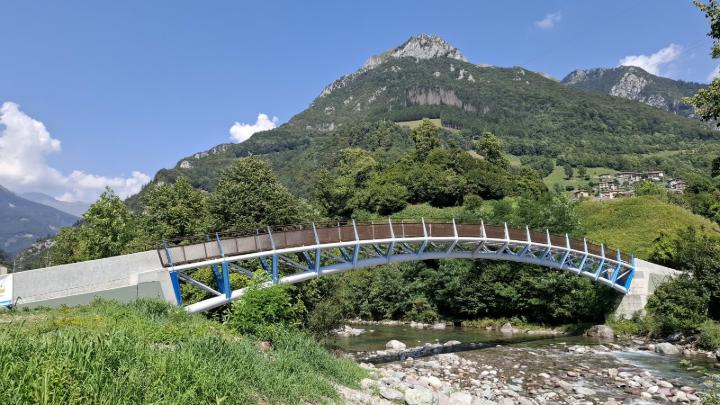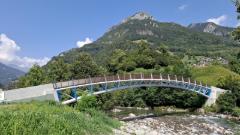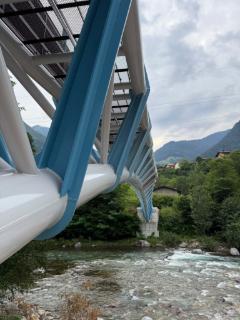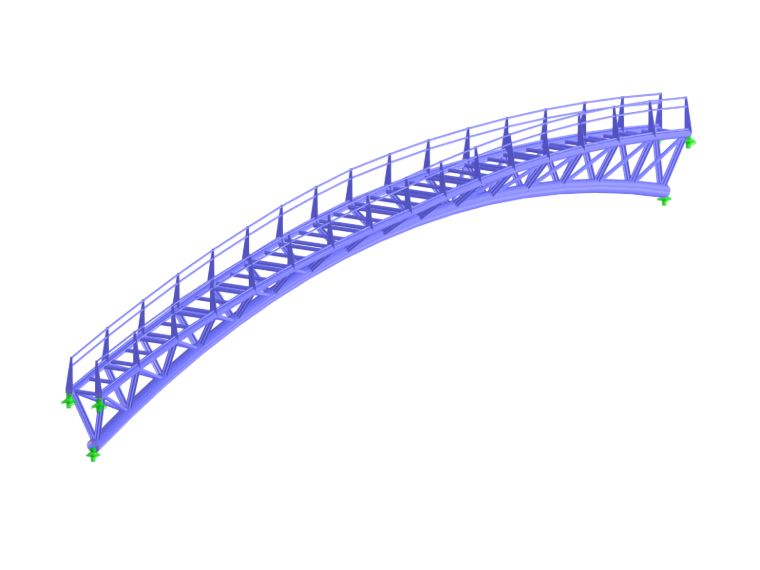
The individual steel components were welded at the factory and then assembled on site using high-strength bolted connections. Two mobile cranes with a load capacity of 400 metric tons (441 US tons) and 800 metric tons (882 US tons) were used to assemble and hoist the structure into place. The entire lifting and assembly process was completed in just four hours.
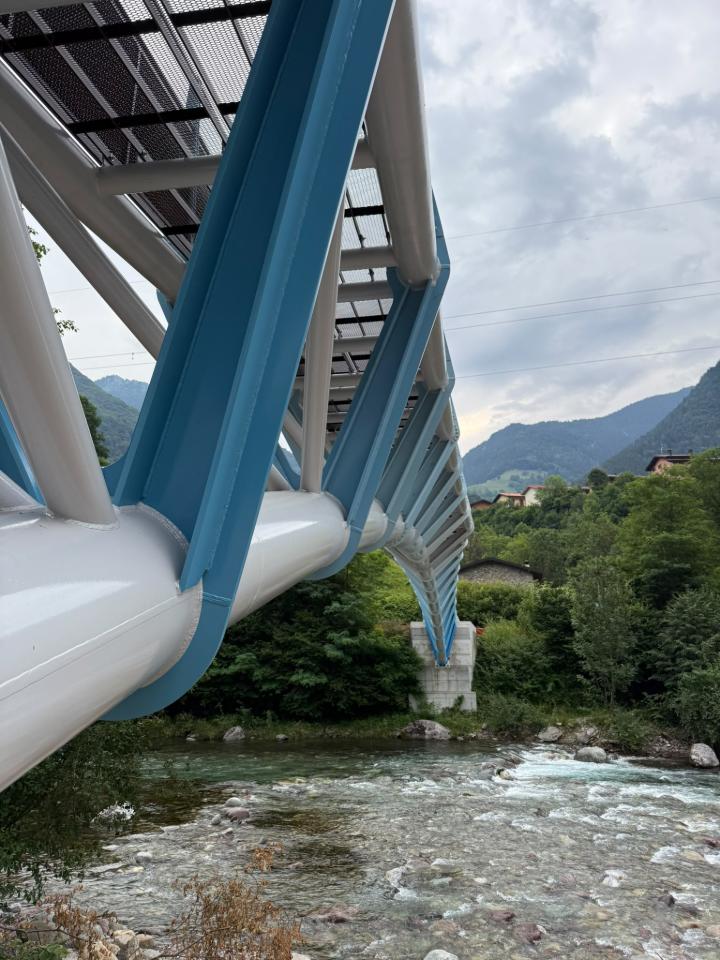
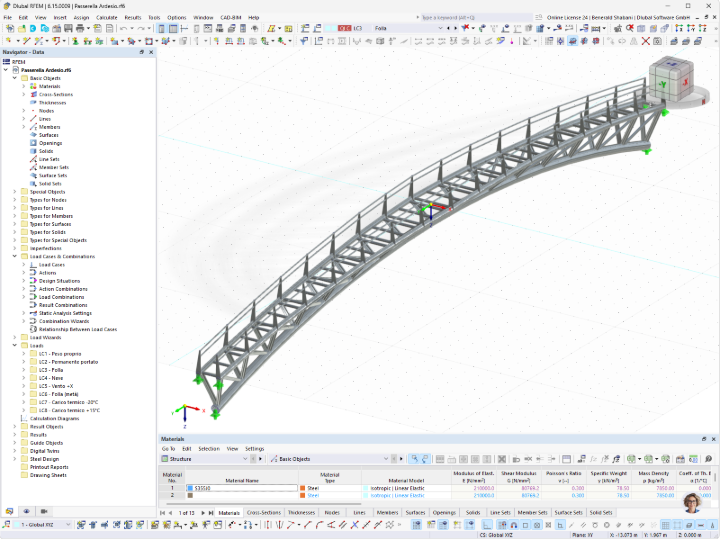
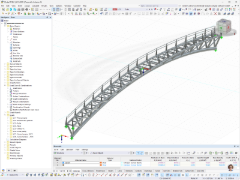
The main supporting structure consists of a lower flange made of a round hollow section with a diameter of 609.6 mm × 30 mm (24 in × 1.2 in. The two upper flanges were constructed from round hollow sections with a diameter of 305 mm (12 in) and a wall thickness of 20 mm (0.8 in). The flanges are connected to one another via secondary structural elements. These ensure the stiffness of the bridge structure and guarantee the safe transfer of loads to the supports.
The bridge deck consists of expanded metal. This solution provides high mechanical strength and allows for reliable drainage of rainwater. Furthermore, the deck fulfills the requirements for durability and safety for pedestrians and cyclists.
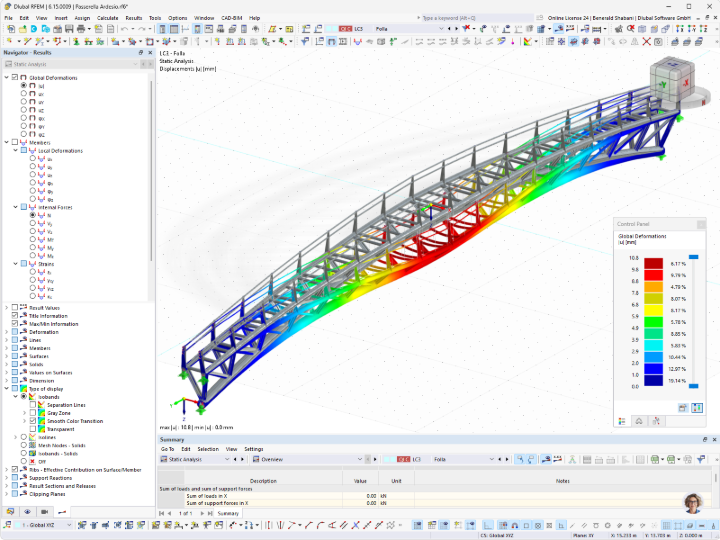
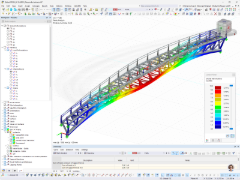
The gently arched structural form improves the bridge’s structural behavior while lending the structure a distinctive sense of lightness. To investigate potential resonance phenomena, the bridge’s dynamic behavior was analyzed in detail. Additionally, the structure was analyzed with regard to the influence of temperature changes.
| Location | 24020 Ardesio, Bergamo, Italy |
| Structural Analysis | Eng. Rota Nodari Marco |