


Whether it's medicine, mathematics, or social sciences: There's a Nobel Prize for just about every field. It’s a recognition of exceptional achievements. And what about the construction industry? In fact, there is a counterpart here, at least for architecture: the Pritzker Prize. Unlike the Nobel Prize, the Pritzker Prize is less well-known to the general public, but it brings the recipient enormous recognition within professional circles.
.png?mw=760&hash=268481e994ca0da650f2d85cbc3a765b57201199)
But what exactly is the Pritzker Prize, and how did it come about? And is it really a genuine award or more of a shady seal of approval? Together, let’s take a look at how architects came to be awarded the Pritzker Prize. And let’s explore what it is necessary to do in order to actually win this prize. Stay tuned!
Why does the Pritzker Prize exist?
It is necessary to do many things in order to win this prize. It all began in 1979. That’s when the Pritzker Prize was first established. The Pritzker Prize was established by the couple Cindy and Jay Pritzker, owners of the world-famous Hyatt hotel group. It was important to both of them to raise public awareness of architecture. After all, pretty much everyone knew the most important buildings of the time, but hardly anyone knew the people behind them.
The Pritzkers founded the Hyatt Foundation, which has been awarding the Pritzker Prize every year since then. And the award has really taken off. Today, the Pritzker Prize is recognized worldwide and regularly leads to new commissions. However, quite a bit has changed since its inception.
Pritzker Prize: Award for Stars
In the beginning, the concept was quite simple. The Pritzker Prize was intended to particularly honor individual architects. Only star architects got a look in, iconic individuals like James Stirling, Frank Gehry, and Norman Foster. The point was to put one of the already famous architects in an even brighter light.
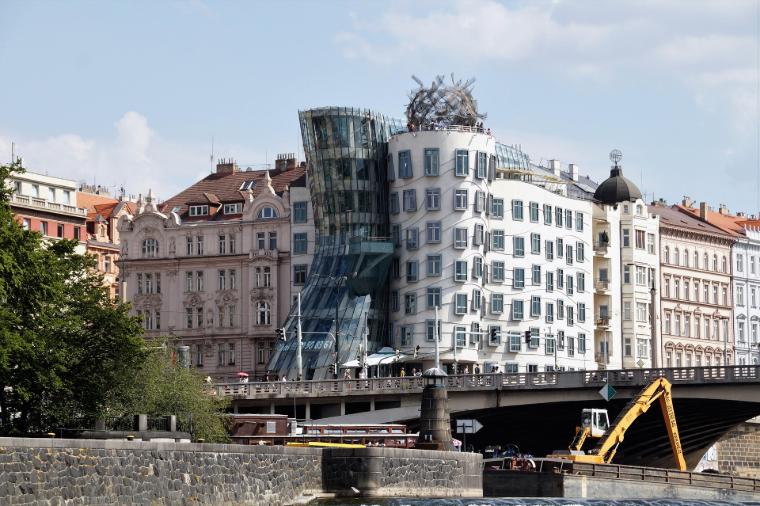
The reasoning why one of them received the Pritzker Prize in that specific year often referred to a particularly spectacular structure. However, this was mainly about prestige and design, not necessarily about whether and how well the building could also be used after its completion. This is where another part of this post begins, because regarding the past, one must report more critically on the Pritzker Prize.
Criticisms of Pritzker Prize
Since the architect is the focus, the myth of genius hangs in the air at every award ceremony. Yet a building is clearly the result of teamwork. Whether engineers, landscape architects, specialty planners, or construction companies: for an architect’s design to be successfully realized, it takes many brilliant minds. Nevertheless, for a long time, the Pritzker Prize was awarded exclusively to individual architects.
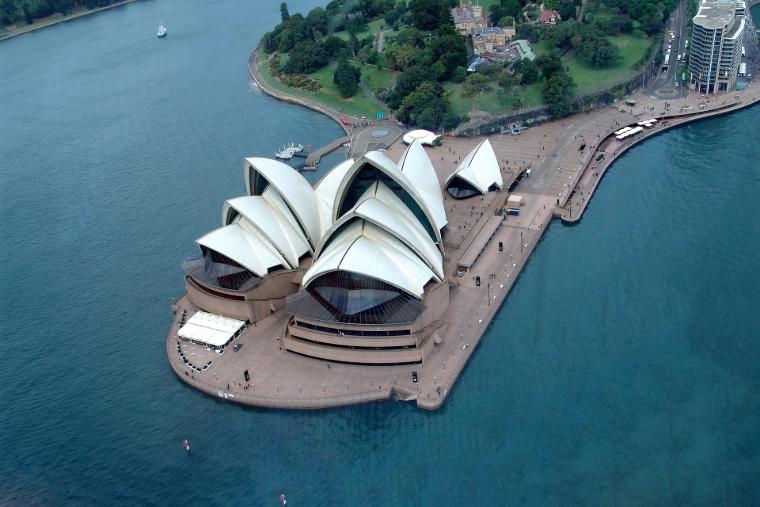
A good example of this issue is Jørn Utzon. He received the Pritzker Prize in 2003, primarily for his design and work on the Sydney Opera House. While his vision for the opera house’s design was absolutely legendary, the iconic roof in particular would have been impossible to build without Sir Ove Arup and his team of engineers. It was only through intensive interdisciplinary collaboration between the architect and the engineers that the Sydney Opera House could be realized. However, there was no recognition commensurate with that of the Pritzker Prize. If you’re interested in the Sydney Opera House, feel free to check it out here: Sydney Opera House: Masterpiece Without Its Master .
Women and Pritzker Prize
Another major point of criticism of the Pritzker Prize: For a long time, women were simply overlooked. Thus, in 2004, 25 years after the Pritzker Prize was introduced, Zaha Hadid was the first woman to receive the prize alone. It must be said, she received it, at least. If you want to learn more about Zaha Hadid, feel free to look here: Blog Post on Zaha Hadid .
The situation was different in the case of Denise Scott Brown. In 1991, her husband and long-term work partner Robert Venturi received the Pritzker Prize. The problem with this: His wife worked as an equal partner on many projects and designs, but was still not awarded. Although in 2013, thousands of students and people from the architecture field signed a petition to grant her the Pritzker Prize retroactively, the endeavor failed due to the jury. Previous decisions regarding the Pritzker Prize could not be changed.
Even back then, women often worked as partners or co-founders in architecture offices without receiving the same public recognition. Fundamentally, women in architecture stood in the shadow of the male-dominated industry for a very long time. So this is not solely a problem of the Pritzker Prize. Nevertheless, something needed to change – and fortunately, it has. So-called joint awards were supposed to provide a remedy.
In the past, office partners were often awarded together, for example, Kazuyo Sejima and Ryue Nishizawa, who received the Pritzker Prize in 2010. Their office SANAA in Tokyo is known primarily for buildings with a flow-like appearance that merge with their surroundings. However, such an approach does not change the fact that women are more likely to be awarded as part of a duo, while male laureates often stand on the stage alone.

Pritzker Prize: Award of Western World?
For a long time, names primarily from Europe, Japan, and North America dominated the Pritzker Prize. This led to increasingly loud criticism: The Pritzker Prize did not recognize cultural diversity. However, this criticism had less to do with the nationality of the laureates and more with the standards by which the Pritzker Prize was awarded.
Because the factors considered and used for evaluation for a long time were heavily influenced by Western architectural ideals: iconic facades and spectacular prestige buildings. Yet an architectural masterpiece was much more than just constructing particularly tall or magnificent buildings. And thus, the Pritzker Prize gradually changed.
Pritzker Prize: Transformation in New Millennium
Gradually, the standards by which the jury determined its laureates changed. Instead of concentrating on famous individuals or well-known offices, completely different factors came into focus. Factors that were simultaneously becoming more and more important in the entire construction industry:
- Resource-efficient construction using local materials
- Consideration of traditional construction methods
- Collaborative planning processes
- Climate-adapted architecture without elaborate technology
All signs pointed towards sustainability. Today, the focus is primarily on projects that assume social, ecological, and cultural responsibility. What counts is the structure in interplay with its environment, so to speak, as an overall achievement that considers every facet of the project.

What criteria does the Pritzker Prize jury use?
But how does the jury actually determine a new laureate? How does the whole process work today? There are no official point systems or weightings. No single building is honored anymore, but rather the complete works of an architect or office. Let's briefly look at how a winner is ultimately determined.
Can one simply apply for the Pritzker Prize to be awarded? No, there is no public application. Instead, architects are nominated. These nominations can be made by a wide variety of people, including:
- Former Pritzker Prize laureates
- Architects
- University professors
- Architecture critics
- Politicians
Nominations can be made until November 1st of the year. Those who are not selected in the end are automatically placed on the list for subsequent years. Once all nominations are completed, an independent jury of five to nine members convenes to deliberate. Among them are not only architects but also other personalities from art, culture, science, or business.
Once someone sits on the jury, they typically remain there for several years. After all, the laureates should be comparable on the one hand, and on the other hand, it is necessary to ensure that new perspectives are regularly incorporated into the evaluation. Members of the Pritzker family or external observers do not participate in the deliberations.
The complete works of the nominated architects are evaluated confidentially. There is no official point system or ranking. This makes the determination of the winner very obscure – another important point of criticism that persists to this day. Officially, laureates should distinguish themselves through talent, vision, and commitment, contributing sustainably both to humanity and the built environment.
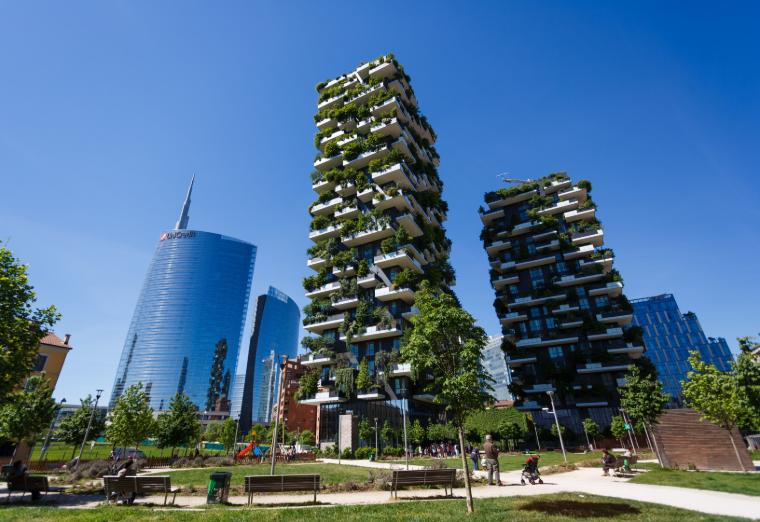
In practice, there are additional criteria. The buildings should, of course, demonstrate high architectural quality. This also includes the use of innovation and new structural or technical solutions. Those who receive the award should, naturally, have created something special. The overall work should have a tangible impact on the development of architecture.
- At the same time, however, it should also be interwoven with region and tradition.
The issue of sustainability is also playing an increasingly important role. The approach to existing structures and resources is just as important as the social value added by a new building. Simply placing a design monstrosity in an old town isn’t enough. One example of what architecture should not be today is the work of Santiago Calatrava. Feel free to check out the blog post if you’re interested: Between Elegance and Escapade: Santiago Calatrava .
At the beginning of the year, the jury deliberates behind closed doors. Absolutely nothing leaks out until the winner is announced. There is no published shortlist, no public voting, and not even explanations for why candidates were rejected.
Then, in the spring, the decision is made: Who won, and why? The jury’s detailed statement is the only insight the public will ever have. The winner receives a cash prize and the bronze medal inscribed with “Pritzker Prize.”
Conclusion: Pritzker Prize Today
Looking back at the past, one crucial question remains: Does the Pritzker Prize still hold the same significance today? Here, different perspectives on the so-called Nobel Prize of Architecture are pitted against one another. Let’s take a look at this in summary.
The Pritzker Prize remains the highest international honor for an architect. The award draws global attention, influences debates surrounding modern architecture, and brings recognition to architects who don’t necessarily design one prestigious building after another. This represents enormous added value for the industry and sparks new trends and innovative ideas.
At the same time, a point of criticism raised at the beginning of this post still holds true: architecture is and remains teamwork. Even the legendary Gustave Eiffel did not design his tower alone. By the way, you can read about his story and that of the Eiffel Tower here:
Furthermore, good architecture—in whatever sense—is difficult to compare objectively. Tastes vary. What one person considers art, another might dismiss. We’ve already published a post about this: Warning: Architectural Eyesore—Is this art or should it go? .
Many architects who have contributed a great deal to the industry have never been honored. After all, there is only one Pritzker Prize awarded each year. Aside from that, the contributions of others involved—such as engineers—often go completely unnoticed. Yet those who bring bold architectural designs to life deserve at least just as much recognition as the architects themselves.
Ultimately, the Pritzker Prize has shaped the world of architecture, and has done so for decades. The cult of star architects has gradually given way to a focus on social responsibility. In this respect, the Pritzker Prize has undoubtedly evolved in the right direction.
And yet, questions remain: Is it fair to honor a single architect? Wouldn’t it make more sense to award the prize to a truly exceptional structural project each year—and thus to everyone involved? We’ll leave it up to you to answer these questions. And if you’d like to read more about exciting structural projects or interesting figures in the construction industry, feel free to check out the other posts on the blog. If you enjoyed this one, you might also be interested in: