Answer:
If you want to perform the design using the general method and have only defined boundary conditions, you will receive an invalid design result stating that the fire resistance cannot be designed and that the effective lengths must be used.
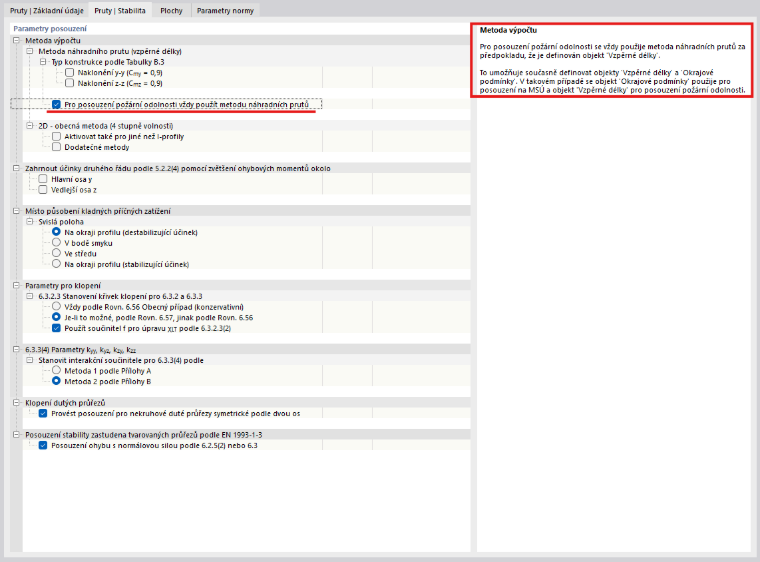
If you enter both the effective lengths and the boundary conditions but do not select the checkbox in the configuration, you will receive an invalid analysis result because the program does not know which method to use.
If you select the checkbox, the boundary conditions will be used for the ultimate limit state, and the effective lengths will be used for the fire resistance design. This is also described in the Ultimate Configuration.