


|
Author
|
Carlos Romero Gómez
|
|
University
|
University of the Basque Country/Euskal Herriko Unibertsitatea (EHU), Spain
|
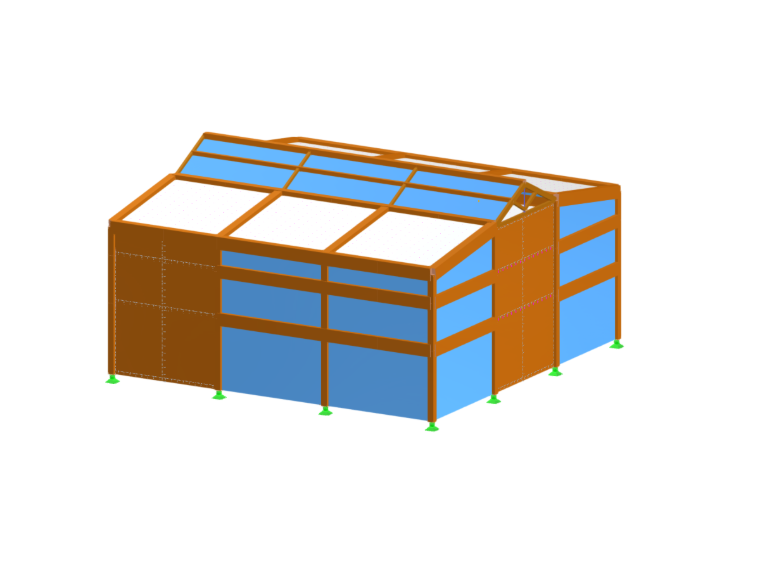
General Objective
Compare the structural behavior, technical efficiency, and estimated cost of the following structural systems:
- Engineered timber, glued laminated timber (GLT) + CLT.
- Composite system: GLT + (CLT + concrete)
This is done through modeling and analysis using Dlubal's RFEM 6 software, with Eurocode 5 serving as the basis for the design standards.
Specific Objectives
1. Model and calculate both structural systems using a parametric environment in Dlubal's RFEM 6 software, applying Eurocode criteria and standard load conditions.
2. Define and analyze structural solutions for two distinct building types:
- Residential building (5 x 5 m spans).
- Commercial building (7.5 x 7.5 m spans).
3. Compare key parameters, such as:
- Thicknesses and dimensions of structural elements.
- Deformations and internal forces.
- Total self-weight of the structure.
- Fire resistance according to Eurocode 5, Part 1-2.
4. Estimate the structural costs associated with each system, taking into account materials, assembly, and logistics.
5. Draw conclusions that enable structural decisions consistent with the project’s sustainability objectives.
6. Acquire and apply knowledge in the use of Dlubal’s structural analysis software for finite element modeling and analysis.